Mostrando entradas con la etiqueta creación. Mostrar todas las entradas

domingo, 26 de abril de 2020

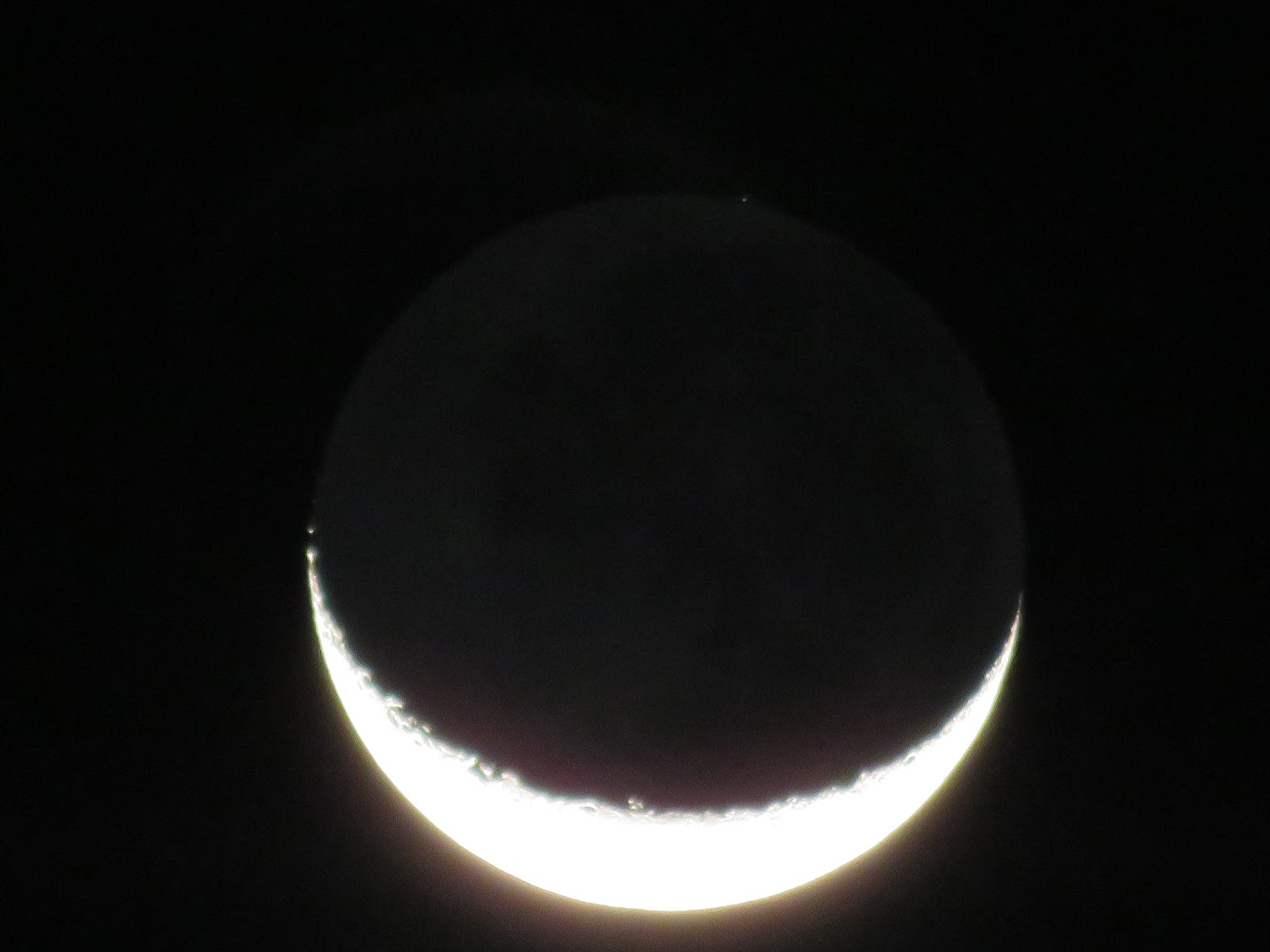
Lo que nos dice la Luna: "si hay oportunidades, pero con paciencia".


Una semana llena de tantas cosas, con poco tiempo, incluyendo este fin de semana, que parecería que nunca iba a acabar. También es presagio de lo que será la próxima semana, con tantas cosas buenas por delante (solo si así lo decidimos). Todo lo podemos ver como una amenaza o como una oportunidad. Para mí son oportunidades que se nos abren como un camino sin fin.

Y más en estos complejos tiempos que estamos viviendo pero que a la vez, lo podemos ver como tiempos para cambiar, ver, disfrutar, estudiar, leer y tantas otras cosas que la mente se nos pueda llenar con grandes nuevas ideas.

Pero esta noche que nos ha regalado la naturaleza, a pesar de este cielo gris que tenemos sobre Caracas, nos ha brindado una hermosa noche, llena de estrellas, con una luna nueva que comienza a aparecer y que de cierta forma nos trae paz y tranquilidad.

Los dejo con una bella frase de Rumi nos puede indicar el verdadero camino de cómo podemos alcanzar lo que queremos. 
Feliz noche.


“A new Moon teaches gradualness and deliberation

 and how one gives birth to oneself slowly. 


Patience with small details 

makes perfect a work, like the universe.”  

- Rumi (poeta, erudito islámico y teólogo persa del siglo XIII)

sábado, 14 de marzo de 2020

Albert Einstein, Relativity and Pi


Albert Einstein
Today we celebrate the birth of Albert Einstein, born on this day in 1879.

Albert Einstein, (born March 14, 1879, Ulm, Württemberg, Germany—died April 18, 1955, Princeton, New Jersey, U.S.), was a German-born physicist who developed the special and general theories of relativity and won the Nobel Prize for Physics in 1921 for his explanation of the photoelectric effect. Einstein is generally considered the most influential physicist of the 20th century.

In the 19th century there were two pillars of physics: Newton’s laws of motion and Maxwell’s theory of light. Einstein was alone in realizing that they were in contradiction and that one of them must fall. Owing to Planck’s laudatory comments and to experiments that gradually confirmed his theories, Einstein was invited to lecture at international meetings, and he rose rapidly in the academic world. He was offered a series of positions at increasingly prestigious institutions, including the University of Zürich, the University of Prague, and finally the University of Berlin, where he served as director of the Kaiser Wilhelm Institute for Physics from 1913 to 1933.

In November 1915 Einstein finally completed the general theory of relativity, which he considered to be his masterpiece. Einstein was convinced that general relativity was correct because of its mathematical beauty and because it accurately predicted the precession of the perihelion of Mercury’s orbit around the Sun. His theory also predicted a measurable deflection of light around the Sun. As a consequence, he even offered to help fund an expedition to measure the deflection of starlight during an eclipse of the Sun.

In 1921 Einstein began the first of several world tours, visiting the United States, England, Japan, and France. En route from Japan, he received word that he had received the Nobel Prize for Physics, but for the photoelectric effect rather than for his relativity theories. 

Einstein also launched the new science of cosmology. His equations predicted that the universe is dynamic—expanding or contracting. This contradicted the prevailing view that the universe was static, so he reluctantly introduced a “cosmological term” to stabilize his model of the universe. In 1929 astronomer Edwin Hubble found that the universe was indeed expanding, thereby confirming Einstein’s earlier work.

In December 1932 Einstein decided to leave Germany forever (he would never go back), as it became obvious to Einstein that his life was in danger. Einstein settled at the newly formed Institute for Advanced Study at Princeton, New Jersey, which soon became a mecca for physicists from around the world.
 
In some sense, Einstein may have been too far ahead of his time. The strong force, a major piece of any unified field theory, was still a total mystery in Einstein’s lifetime. Only in the 1970s and ’80s did physicists begin to unravel the secret of the strong force with the quark model. Nevertheless, Einstein’s work continues to win Nobel Prizes for succeeding physicists. In 1993 a Nobel Prize was awarded to the discoverers of gravitation waves, predicted by Einstein. In 1995 a Nobel Prize was awarded to the discoverers of Bose-Einstein condensates (a new form of matter that can occur at extremely low temperatures). Known black holes now number in the thousands. New generations of space satellites have continued to verify the cosmology of Einstein. And many leading physicists are trying to finish Einstein’s ultimate dream of a “theory of everything.”


Pi (π) Day March 14, 2020
Founded in 1988 at the Exploratorium, Pi (π) Day has become an international holiday, celebrated live and online all around the world. The numbers in the date (3/14) match the first three digits of the mathematical constant pi (π).
What is π, anyway? Divide any circle’s circumference by its diameter; the answer (whether for a pie plate or a planet) is always approximately 3.14, a number we represent with the Greek letter π. Keep calculating π’s digits with more and more accuracy—as mathematicians have been doing for 4,000 years—and you’ll discover they go on literally forever, with no pattern.
Pi is most commonly shown as being 3.14159 but this is just an approximate value. It's an irrational number, and its decimal representation never ends.  
The History of Pi
Mathematicians and scientists have been trying to uncover the mystery of Pi for thousands of years, dating back to Ancient Greece and Babylonian times.
According to Britannica Encyclopedia, in 2,000 BCE Pi used to be known as 3.125. This was because the Babylonians calculated the perimeter of a hexagon within a circle. Moving onto the ancient Egyptians (1650 BCE), the mathematical ratio became 3.16045, as shown in the Rhind papyrus—a document that included mathematical tables and problems.
Archimedes, the Greek mathematician, devised a method—in 250 BCE—to obtain Pi to any desired accuracy. According to Britannica, the mathematician "inscribed and circumscribed regular polygons" about a circle to get the upper and lower bounds, getting an average value of 3.1418. Archimedes also discovered that the ratio of the area of a circle to the square of its radius is the same constant.
The symbol for Pi was devised by a British mathematician named William Jones in 1706 AD and was later popularized by the Swiss mathematician Leonhard Euler. Today, it is used in various formulas of physics and engineering to describe the motion of pendulums, the vibration of strings, and alternating electric currents.
As the first three numbers in Pi are 3.14, March 14 is known as National Pi Day. (@Newsweek Magazine)


lunes, 23 de diciembre de 2019

Hoy es un MÁS Día (No un día más)


Hoy es un MÁS día, no un día más. Sí, son las mismas palabras, pero en diferente orden. Siempre hemos escuchado que, en matemáticas, cuando multiplicamos el orden de los factores no altera el producto. Pero en el lenguaje sabemos que el orden de las palabras sí altera el resultado de lo que queremos decir y en este caso, pensar.

Hoy es un MÁS Día tiene leve y sutiles diferencias con sólo tener ‘un día más’. Veamos por ejemplo lo siguiente:

Un día más es un día normal, quizás hasta rutinario. Es un día en donde haremos lo mismo que ayer o que hace un mes. Es un día en el que sacaremos nuestras tareas o lo que tenemos que estudiar, haremos nuestro trabajo como siempre lo hacemos, veremos televisión como siempre lo hacemos, usaremos el tiempo como siempre lo hacemos. Y al final del día simplemente habrá sido un día más.

En cambio, un MÁS Día se convierte en un día muy especial. Es un día diferente, en el que me esmero con intención, en el que cambio las actividades que hago o en el que soy una persona curiosa. Un más día en el que me intereso en lo que hago para hacerlo mejor, en el que las tareas no son simples tareas sino parte de lo que soy y me ocupo de hacerlas de una manera efectiva. Es un día en el que trato de conocer a nuevas personas, intercambiar ideas con más gente inteligente, tener mejores conversaciones y hablar de temas diferentes. Es un día para mejorar los procesos o hacer lo que hago de una manera más creativa. Es un día donde ayudo, colaboro y propongo más de lo que normalmente hago y doy más de lo que puedo dar todos los días. Es un día donde el servicio que presto es mejor, donde además de ser cordial y atento lo hago con mucha dedicación y con el simple propósito de que mi desenvolvimiento ayude a los demás a estar y a sentirse mejor. Un MÁS Día es un día donde invierto mi tiempo de la mejor manera, para ayudar de la mejor forma y, al final del día, no habrá sido simplemente un día más sino un MÁS Día en el que habré cumplido mi verdadero propósito. En otras palabras, habrá sido un día muy especial.

¿Has tenido días así?; ¿Has tenido días en el que te sientes realizado y contento al final del día? Por supuesto que sí, todos los hemos tenido. Y, ¿cómo nos sentimos? Por supuesto de maravilla, tranquilos, de que hemos logrado algo más y que hemos contribuido en construir algo mejor.

Crear y tener un MÁS Día es una decisión propia; indudablemente que lo es. Se convierte entonces en una mejor actitud que cada quien debe tener y conlleva una gran motivación personal. Y ese MÁS Día nos lleva a pensar y reflexionar de una menara diferente. Es llegar a tener un día perfecto en el que luego de dar lo mejor de nosotros, esperemos lo mejor para nosotros. 

El musical Les Miserables, de la novela de 1862 del poeta y novelista francés Victor Hugo, adaptado para un musical cantado con música de Claude-Michel Schönberg y letra original en francés de Jean-Marc Natelfue, tuvo su adaptación al inglés por el productor Cameron Mackintosh en 1985. La última estrofa de la canción ONE DAY MORE (cuya traducción libre al castellano sería UN MAS DÍA) dice así: 
Tomorrow is the judgement day.
Tomorrow we'll discover
What out God in Heaven has in store!
One more dawn!
One more day!
One day more!

Es tener un Más Día. Para algunas personas lo imposible es imposible; para otras, lo imposible es posible. Es entender que cualquier cosa puede pasarle a cualquiera, por lo que no solo debemos vivir simplemente los días (o perderlos) sino vivirlos plenamente y poder disfrutar de cada momento y de lograr que cada día sea un día muy especial. Es, en otras palabras, hacerlo de una manera distinta con una perspectiva diferente. Es tener la actitud positiva y la motivación personal correcta todo el día, todos los días. Es eso que yo llamo MOTITUD, cuando la Motivación y la Actitud van al unísono para que logremos desarrollar nuestro verdadero potencial. Recordemos que podemos encontrar algo extraordinariamente excepcional en tan solo un minuto, o que una simple persona puede hacer las cosas que nadie puede imaginar.

Es dar ese más en cada momento, en cada ocasión, con cada sonrisa, y en cada oportunidad. Por estas y muchas otras razones, busquemos la Motitud propia que nos permita tener un Más Día todos los días.

viernes, 16 de octubre de 2015

'Credo Personal', por César Yacsirk

Siempre buscando temas que nos motiven e inspiren, un amigo y profesor de Psicología Positiva (y actual profesor mío) me invitó a que leyera su Blog http://psiposorganizacional.blogspot.com/

La verdad es que además de interesante por los artículos y explicaciones que allí da, me pareció muy oportuno preguntarle si podía yo publicar en este blog uno de sus artículos. Me siento muy alagado de que me lo haya permitido y con mucha alegría comparto con ustedes uno de sus artículos que más me llamó la atención: su "Credo Personal".

Lo pueden leer completo en el siguiente enlace: 

César nos dice lo siguiente:

Creo en Dios sin saber porque, solo creo, pero decidí no dejarle el trabajo que me corresponde.

Creo en la magia y he recibido magia en mi vida, pero prefiero ser mago y enseñar a hacer magia. La obligación del mago es ocultar la mecánica de la ilusión, la del observador descubrirla y ambos en no divulgarla. Pero ambos también, cómplices en ser magos.

Porque la magia es sentirla y hacerla sentir. El famoso ilusionista "Rene Lavand" contaba
que nunca olvidará la mirada de ternura, dicha, ilusión y asombro de un niño de 11 años al cual le hizo un efecto mágico con un trapito rojo. Ese niño era ciego, había visto con los ojos del alma.

Creo que hay mucho que aprender aún. Ni viviendo tres, cuatro, diez vidas, sin poder poseer todo el conocimiento existente. Sin embargo, estudiar cocina no me hace Chef o estudiar fotografía me hace Fotógrafo. Es necesario PRACTICAR.

Conocer mis fortalezas y su impacto sobre el bienestar. Valorar la importancia del "humor" en mi vida y en mi trabajo. Perdonar y practicar la Gratitud es importante.

Sin embargo, solo cuando práctico lo que aprendo y lo hago una extensión de mi persona, es cuando puedo asirme de un título. La promoción del bienestar implica esto.

Para una persona como yo que creo en la MAGIA personal, gerencial y empresarial, me agrada mucho ver como una gran cantidad de personas siguen generando ideas positivas y de muchas maneras creen y ayudan a divulgar algo que para mi es muy optimista e inspirador:

"el que todos tenemos un enorme potencial con el que podemos alcanzar 
todo lo que nos propongamos."

Gracias a Cesar Yacsirk por su Credo Personal y por permitirme compartirlo con mis lectores.

NOTA: César nos dejó en enero de 2023. Su legado y su inspiración seguirán con nosotros. Gracias César por tu amistad.

Seguiremos Motivando, Luis Vicente


Credo Personal


Creo en Dios sin saber porque, solo creo, pero decidí no dejarle el trabajo que me corresponde.


Creo en la magia y he recibido magia en mi vida, pero prefiero ser mago y enseñar a hacer magia. La obligación del mago es ocultar la mecánica de la ilusión, el observador descubrirla y ambos en no divulgarla. Pero ambos cómplices en ser magos.


Porque la magia es sentirla y hacerla sentir. El famoso ilusionista "Rene Lavand" contaba que nunca olvidará la mirada de ternura, dicha, ilusión y asombro de un niño de 11 años al cual le hizo un efecto mágico con un trapito rojo. Ese niño era ciego, había visto con los ojos del alma.


Creo que hay mucho que aprender aún. Ni viviendo tres, cuatro, diez vidas, sin poder poseer todo el conocimiento existente. Sin embargo, estudiar cocina no me hace Chef o estudiar fotografía me hace Fotógrafo. 


Conocer mis fortalezas y su impacto sobre el bienestar. Valorar la importancia del "humor" en mi vida y en mi trabajo. Perdonar y practicar la Gratitud es importante.


Sin embargo, solo cuando práctico lo que aprendo y lo hago una extensión de mi persona, es cuando puedo asirme de un título. La promoción del bienestar implica esto.


Creo que la suerte existe y que trae escondido siempre grandes aprendizajes y responsabilidades. Sin embargo, no creo buena idea dejar en el azar las cosas importantes de mi camino.


Creo en las debilidades como parte de la escena, pero no creo en ellas como buen punto de partida. Por otra parte, creo en las fortalezas por ser con lo que cuento, por eso enseño lo que enseño


Creo en lo etéreo sin querer dejar de ver lo concreto y lo concreto sin dejar de ver al cielo.

sábado, 28 de junio de 2014

Lecciones Gerenciales del Mundial de Fútbol Brasil 2014

Acabando terminar la primera ronda eliminatoria del mundial Brasil 2014 podemos reflexionar en algunos temas importantes. Algunos tendrían que ver con los preparativos previos que se tienen que llevar a cabo para que la infraestructura, la vialidad, la seguridad y tantas otras cosas estén listas para la llegada de los millones de visitantes al país sede, para que su experiencia sea la mejor experiencia posible. Otros tendrían que ver con lo que significa ser el país sede de un evento mundial tan importante. Sin embargo, también creo que hay importantes aprendizajes en diversos temas gerenciales.

Para los aficionados - y los no tan aficionados - del fútbol, un mundial reúne una serie de características importantes. En primer lugar reúne a los mejores jugadores de los mejores equipos del mundo; en segundo lugar se han hecho grandes esfuerzos para que la copa del mundo sea un evento no sólo de mucha importancia sino de mucha relevancia para el país sede; en tercer lugar ningún otro evento deportivo reúne a tanta gente a nivel mundial. De acuerdo un comunicado de la FIFA, el mundial Brasil 2014 ya ha roto récords de audiencia en televisión a nivel mundial; pero no sólo esto, también ha roto récords de audiencia en dispositivos móviles ya que por primera vez en la historia la gente está viendo los juegos por sus teléfonos o sus tabletas.

Si bien todavía falta la parte más importante de este mundial en la ronda eliminatoria hemos podido observar algunas cosas muy interesantes en materia gerencial que resumo a continuación:

1.- Han llegado mejores equipos. Por supuesto como mencioné antes, los equipos que llegan son - por lo general - los que están más preparados y que tienen mejores jugadores; sin embargo, en esta oportunidad hemos visto equipos que se han dedicado y esforzado mucho más allá de lo que han hecho otras oportunidades. Es así como vemos, por ejemplo, que el equipo de Costa Rica fue el primero que se congregó para prepararse, estudiar técnicas, entrenar como equipo y estar listo para lo que fue su mejor actuación en la historia, durante la ronda eliminatoria de un mundial.

2.- Todos necesitamos inspiración. No importa quién sea el anfitrión, el favorito, o el equipo mejor preparado; la inspiración siempre ayuda. Fue muy emocionante ver cómo en su juego inaugural, el equipo de Brasil fue motivado e inspirado por todos los aficionados que estaban en el estadio cantando a Capela su Himno Nacional una vez que la música dejó de sonar. La emoción y el nivel de energía tan alto que en ese momento había en ese estadio y que se recogía en la cara tanto de los aficionados como de los propios jugadores, es algo digno de apreciar. Los invitó a ver el siguiente video: http://www.youtube.com/watch?v=uG5xZCsB_m0

3.- Hay que desarrollar nuevo talento. Si bien esto es algo que siempre se sabe, no todo el tiempo trabajamos en ello. El talento hay que desarrollarlo continuamente; esto implica no sólo las técnicas, el esfuerzo, la preparación, la resistencia, el empuje de cada jugador o miembro del equipo, sino además la preparación mental para una competencia tan importante. Adicionalmente todos debemos estar siempre en la búsqueda de nuevo talento. Para este mundial estamos viendo nuevas caras, como por ejemplo: Sayouba, del equipo de Costa de Marfil; Pulido, de México; James de Colombia y Neymar, del equipo de Brasil. Por supuesto que todos los mundiales tienen jugadores con experiencia y jugadores nuevos. También vemos que hay figuras que resaltan por la preparación que han tenido, por el gran esfuerzo que han hecho o por las habilidades que tienen para hacer las cosas mejor que otros. Y no quiero entrar en una discusión de qué jugador es mejor o con mejores cualidades, sino que simplemente menciono que tanto Neymar como James están jugando su primer mundial de fútbol, siendo considerados ya entre los mejores jugadores de la actualidad. La lección que debemos aprender es: debemos siempre estar en la búsqueda de nuevos y mejores talentos para que ayuden al equipo a alcanzar las metas propuestas.

4.- Tenemos que prepararnos para lo inesperado.  En la vida diaria de las personas y de las empresas ocurren emergencias o situaciones urgentes que tenemos que solventar. En un equipo profesional, empresarial o deportivo, ocurren cosas que no permiten a veces su mejor desenvolvimiento. En la primera ronda de este mundial vimos cosas inesperadas. Por ejemplo, vemos como el equipo de Costa Rica, al cual me refería antes, terminó de primero en un grupo en donde los otros tres equipos siempre en estado considerados dentro de los mejores equipos del mundo; en segundo lugar vimos situaciones en donde no sólo el campeón actual sino campeones anteriores no pasaron de una primera ronda; por último hubo juegos en donde la cantidad de goles en contra de los equipos favoritos pasaba más allá de lo aceptable. Estas son situaciones que nos pasan a diario, con los equipos que manejamos o en las situaciones que vivimos. Sin embargo, lo que tenemos que hacer es siempre enfocarnos en lo importante y estar preparados para manejar lo urgente y lo inesperado.

5.- Necesitamos nuevos líderes. Todos los días necesitamos que los líderes nos indiquen el camino a seguir. Por supuesto nos vienen a la imagen de Nelson Mandela quien con temple y mucho conocimiento logró cambiar el destino de un país. Cuando trabajamos en empresas no siempre el líder es el presidente de la compañía; cuando trabajamos en equipo siempre hay uno que resalta. Lo importante es permitirle a ese nuevo líder surgir y que se desarrolle. Me llamó mucho la atención leer titulares que surgieron en la etapa de clasificación de México que decían cosas como “Guillermo Ochoa es el portero que México no necesita”. Pues quienes vieron los primeros juegos de la selección mexicana vieron la preparación que tuvo este jugador y las veces que ha logrado salvar su portería. Por ello en estos días pasados leí un artículo en el que se mencionaba que “Guillermo Ochoa el nuevo héroe de México”. Los héroes y los líderes surgen, crecen, evolucionan y se potencian al máximo en los momentos que más se necesitan. Por ello no nos debe sorprender que lo que queda mundial sigamos viendo el surgimiento de nuevos líderes y nuevos héroes que llevarán a sus respectivos equipos a nuevos lugares.


Todavía falta la parte más importante de este mundial, donde deberá ganar el equipo que más preparado esté, que tenga el mejor talento, que tenga nuevos héroes y desarrolle nuevos líderes y, que en conjunto, se esfuerce y trabaje en alcanzar el logro y las metas para llegar a ser los nuevos campeones del mundo. Lo importante siempre será aprender de las lecciones que vivimos todos los días, entender que nos tenemos que adaptar y ser flexibles para lograr alcanzar esas metas y, que de una u otra manera, tenemos que estar esforzándonos todos los días más para lograr un mejor equipo y una mejor empresa.

Seguiremos motivando!

Luis Vicente Garcia
@lvgarciag 

viernes, 18 de octubre de 2013

Albert Einstein sobre “La Crisis”

Albert Einstein dijo lo siguiente sobre La Crisis:

“La Crisis es la mejor bendición que puede sucederle a personas y países porque la crisis trae progresos. La creatividad nace de la angustia. Es en la crisis que nace la inventiva, los descubrimientos y las grandes estrategias. Quien atribuye a la crisis sus fracasos y penurias, violenta su propio talento y respeta más a los problemas que a las soluciones. Es en la crisis donde aflora lo mejor de cada uno. Hablar de crisis es promoverla y callar en la crisis es exaltar el conformismo. En vez de esto, trabajemos duro. Acabemos de una vez con la única crisis amenazadora que es la tragedia de no querer luchar por superarla.”
Albert Einstein

A veces me pregunto porque nosotros (todos) actuamos como lo hacemos. No pensamos en las soluciones sino en los problemas. No somos creativos e innovadores sino conformistas con nuestra realidad. No tratamos de superarnos, sino que esperamos a que alguien, otro, nos traiga oportunidades, en vez de salir nosotros a conquistarlas o inclusive, a generarlas.

Pues cambiemos de actitud, comencemos a pensar positivamente y entre todos, comencemos desde ya a crea un nuevo y mejor futuro. En otras palabras, aprovechemos las crisis para crear y ser más innovadores!

Seguiremos motivando y creando. Luis Vicente

domingo, 19 de mayo de 2013

The Daffodil Principle


The Daffodil Principle

Jaroldeen Asplund Edwards, autor.

Hay historias que nos pueden inspirar cuando más lo necesitamos. Les dejo una bella historia del Daffodil Principle. LV

The principle her daffodil garden taught is one of the greatest principle of celebration: learning to move toward our goals and desires one step at a time -- often just one baby-step at a time -- learning to love the doing, learning to use the accumulation of time.

When we multiply tiny pieces of time with small increments of daily effort, we too will find we can accomplish magnificent things. We can change the world.

The Daffodil Principle

Several times my daughter had telephoned to say, "Mother, you must come and see the daffodils before they are over."  I wanted to go, but it was a two-hour drive from Laguna to Lake Arrowhead. Going and coming took most of a day--and I honestly did not have a free day until the following week.

"I will come next Tuesday ", I promised, a little reluctantly, on her third call. 

Next Tuesday dawned cold and rainy. Still, I had promised, and so I drove the length of Route 91, continued on I-215, and finally turned onto Route 18 and began to drive up the mountain highway. The tops of the mountains were sheathed in clouds, and I had gone only a few miles when the road was completely covered with a wet, gray blanket of fog. I slowed to a crawl, my heart pounding. The road becomes narrow and winding toward the top of the mountain. 

As I executed the hazardous turns at a snail's pace, I was praying to reach the turnoff at Blue Jay that would signify I had arrived. When I finally walked into Carolyn's house and hugged and greeted my grandchildren I said, "Forget the daffodils, Carolyn! The road is invisible in the clouds and fog, and there is nothing in the world except you and these darling children that I want to see bad enough to drive another inch!"

My daughter smiled calmly," We drive in this all the time, Mother."

"Well, you won't get me back on the road until it clears--and then I'm heading for home!" I assured her.

"I was hoping you'd take me over to the garage to pick up my car. The mechanic just called, and they've finished repairing the engine," she answered.

"How far will we have to drive?" I asked cautiously.

"Just a few blocks," Carolyn said cheerfully.

So we buckled up the children and went out to my car. "I'll drive," Carolyn offered. "I'm used to this." We got into the car, and she began driving.

In a few minutes I was aware that we were back on the Rim-of-the-World Road heading over the top of the mountain. "Where are we going?" I exclaimed, distressed to be back on the mountain road in the fog. "This isn't the way to the garage!"

"We're going to my garage the long way," Carolyn smiled, "by way of the daffodils."

"Carolyn," I said sternly, trying to sound as if I was still the mother and in charge of the situation, "please turn around. There is nothing in the world that I want to see enough to drive on this road in this weather."

"It's all right, Mother," She replied with a knowing grin. "I know what I'm doing. I promise, you will never forgive yourself if you miss this experience."

And so my sweet, darling daughter who had never given me a minute of difficulty in her whole life was suddenly in charge -- and she was kidnapping me! I couldn't believe it. Like it or not, I was on the way to see some ridiculous daffodils -- driving through the thick, gray silence of the mist-wrapped mountaintop at what I thought was risk to life and limb.

I muttered all the way. After about twenty minutes we turned onto a small gravel road that branched down into an oak-filled hollow on the side of the mountain. The Fog had lifted a little, but the sky was lowering, gray and heavy with clouds. 

We parked in a small parking lot adjoining a little stone church. From our vantage point at the top of the mountain we could see beyond us, in the mist, the crests of the San Bernardino range like the dark, humped backs of a herd of elephants. Far below us the fog-shrouded valleys, hills, and flatlands stretched away to the desert.

On the far side of the church I saw a pine-needle-covered path, with towering evergreens and manzanita bushes and an inconspicuous, lettered sign "Daffodil Garden."

We each took a child's hand, and I followed Carolyn down the path as it wound through the trees. The mountain sloped away from the side of the path in irregular dips, folds, and valleys, like a deeply creased skirt.

Live oaks, mountain laurel, shrubs, and bushes clustered in the folds, and in the gray, drizzling air, the green foliage looked dark and monochromatic. I shivered. Then we turned a corner of the path, and I looked up and gasped. Before me lay the most glorious sight, unexpectedly and completely splendid. It looked as though someone had taken a great vat of gold and poured it down over the mountain peak and slopes where it had run into every crevice and over every rise. Even in the mist-filled air, the mountainside was radiant, clothed in massive drifts and waterfalls of daffodils. The flowers were planted in majestic, swirling patterns, great ribbons and swaths of deep orange, white, lemon yellow, salmon pink, saffron, and butter yellow.

Each different-colored variety (I learned later that there were more than thirty-five varieties of daffodils in the vast display) was planted as a group so that it swirled and flowed like its own river with its own unique hue.

In the center of this incredible and dazzling display of gold, a great cascade of purple grape hyacinth flowed down like a waterfall of blossoms framed in its own rock-lined basin, weaving through the brilliant daffodils.  A charming path wound throughout the garden. There were several resting stations, paved with stone and furnished with Victorian wooden benches and great tubs of coral and carmine tulips. As though this were not magnificence enough, Mother Nature had to add her own grace note -- above the daffodils, a bevy of western bluebirds flitted and darted, flashing their brilliance. These charming little birds are the color of sapphires with breasts of magenta red. As they dance in the air, their colors are truly like jewels above the blowing, glowing daffodils. The effect was spectacular.

It did not matter that the sun was not shining. The brilliance of the daffodils was like the glow of the brightest sunlit day. Words, wonderful as they are, simply cannot describe the incredible beauty of that flower-bedecked mountain-top. 

Five acres of flowers! (This too I discovered later when some of my questions were answered.) "But who has done this?" I asked Carolyn. I was overflowing with gratitude that she brought me -- even against my will. This was a once-in-a-lifetime experience.

"Who?" I asked again, almost speechless with wonder, "And how, and why, and when?" 

"It's just one woman," Carolyn answered. "She lives on the property. That's her home." Carolyn pointed to a well-kept A-frame house that looked small and modest in the midst of all that glory.

We walked up to the house, my mind buzzing with questions.  On the patio we saw a poster. " Answers to the Questions I Know You Are Asking" was the headline. The first answer was a simple one. "50,000 bulbs," it read. The second answer was, "One at a time, by one woman, two hands, two feet, and very little brain." The third answer was, "Began in 1958."

There it was. The Daffodil Principle.

For me that moment was a life-changing experience. I thought of this woman whom I had never met, who, more than thirty-five years before, had begun -- one bulb at a time -- to bring her vision of beauty and joy to an obscure mountain-top. One bulb at a time.

There was no other way to do it. One bulb at a time. No  shortcuts -- simply loving the slow process of planting. Loving the work as it unfolded.

Loving an achievement that grew so slowly and that bloomed for only three weeks of each year. Still, just planting one bulb at a time, year after year, had changed the world.

This unknown woman had forever changed the world in which she lived. She had created something of ineffable magnificence, beauty, and inspiration.

The principle her daffodil garden taught is one of the greatest principle of celebration: learning to move toward our goals and desires one step at a time -- often just one baby-step at a time -- learning to love the doing, learning to use the accumulation of time.

When we multiply tiny pieces of time with small increments of daily effort, we too will find we can accomplish magnificent things. We can change the world.

"Carolyn," I said that morning on the top of the mountain as we left the haven of daffodils, our minds and hearts still bathed and bemused by the splendors we had seen, "it's as though that remarkable woman has needle-pointed the earth! Decorated it. Just think of it, she planted every single bulb for more than thirty years. One bulb at a time! And that's the only way this garden could be created. Every individual bulb had to be planted. There was no way of short-circuiting that process. Five acres of blooms. That magnificent cascade of hyacinth!

All, all, just one bulb at a time."

The thought of it filled my mind. I was suddenly overwhelmed with the implications of what I had seen. "It makes me sad in a way," I admitted to Carolyn. "What might I have accomplished if I had thought of a wonderful goal thirty-five years ago and had worked away at it 'one bulb at a time' through all those years. 

Just think what I might have been able to achieve!"

My wise daughter put the car into gear and summed up the message of the day in her direct way. "Start tomorrow," she said with the same knowing smile she had worn for most of the morning. Oh, profound wisdom!

It is pointless to think of the lost hours of yesterdays. The way to make learning a lesson a celebration instead of a cause for regret is to only ask, "How can I put this to use tomorrow?"

Jaroldeen Asplund Edwards
Author 

Las conversaciones que resuelven

  Las conversaciones que resuelven El liderazgo no consiste en hablar más, sino en lograr que algo cambie después de conversar Por Luis Vice...